The key factors behind FIFA’s political infighting and conflict with UEFA
World football’s governing body finds itself embroiled in a major crisis just days after President Gianni Infantino unveiled a proposal to establish FIFA Forward Enterprise (FFE), a dedicated commercial branch created to manage World Cup rights and operations.
On Wednesday, UEFA issued a statement expressing its strong opposition and complete rejection of the initiative, warning that no European national team will participate in FIFA competitions as long as the proposal remains active.
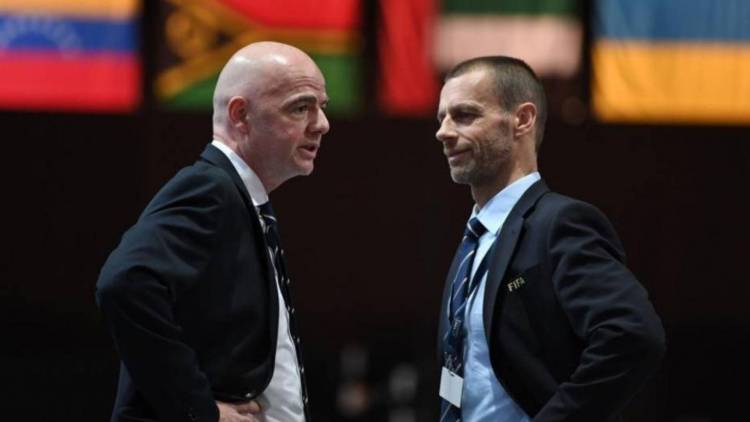
According to reporting by Marca en Zona, this ultimatum is closely tied to ongoing personal and political disputes between Gianni Infantino and UEFA President Aleksander Čeferin. Their relationship dates back to Infantino’s tenure as UEFA General Secretary, a position he held until assuming the FIFA presidency in February 2016, shortly before Čeferin took the helm at UEFA.
Infantino claims he was instrumental in helping Čeferin secure his current post, while accusing the Slovenian executive of attempting to destabilize his administration and position himself as a candidate for the FIFA presidency. The relationship between the two leaders has completely broken down, evolving into a battle for political influence.
Tensions surfaced during the 2026 World Cup through two notable incidents. On June 11, UEFA appointed Omar Abdulkadir Artan as referee for the UEFA Super Cup, shortly after the Somali official was unable to enter the United States due to visa issues. On July 6, UEFA publicly criticized FIFA’s decision to overturn a red card suspension for U.S. national team player Folarin Balogun, labeling the ruling "incomprehensible and unjustifiable."
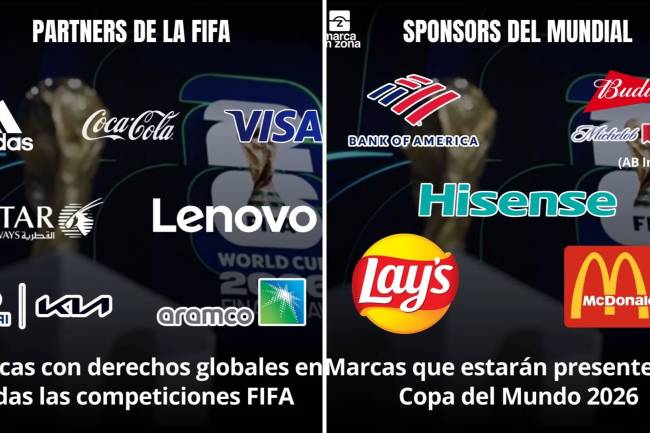
The proposed FFE structure calls for a for-profit commercial entity tasked with handling ticket sales, broadcasting rights, sponsorships, and licensing for future World Cups. FIFA plans to sell up to a 20% stake to private investors, with an investment firm linked to Donald Trump’s family positioned as the leading contender.
Internal friction mounted on Friday morning when Kevin Lamour, FIFA Chief Operating Officer and third-in-command, stated that the project is "the vision of a single individual, not the governing body" and claimed FIFA staff were "misled" by Infantino. Shortly after, senior presidential advisor Carlos Cordeiro submitted his resignation, calling the deal a "poor arrangement for member associations and the future of football."
Marca en Zona has confirmed that neither Lamour nor the officials under his direction were informed of Infantino's plan. A primary source of internal pushback involves Infantino’s proposal to allocate the 20% stake to Thrive Eternal, an entity owned by Joshua Kushner, brother of Donald Trump’s son-in-law Jared Kushner.
Addressing the matter, UEFA issued a statement declaring: "Some things are simply too important to sell. The World Cup belongs to football. It will always be so. And as long as Europe has a voice, it will never be for sale," an stance backed by all 55 European member federations.
CONCACAF (North America, Central America, and the Caribbean) and the AFC (Asia) have aligned with UEFA in publicly rejecting the project, despite FIFA's stated intention to proceed with consultation. Meanwhile, CONMEBOL released a statement urging all parties to "prioritize football."
A vote involving all 211 member associations is currently scheduled for December 19. However, Infantino now faces a conflict that extends beyond his feud with UEFA into a broader internal governance crisis. International news outlets, including The New York Times, report that FIFA is now considering withdrawing the proposal entirely.
-
by Manuel Ingenito